
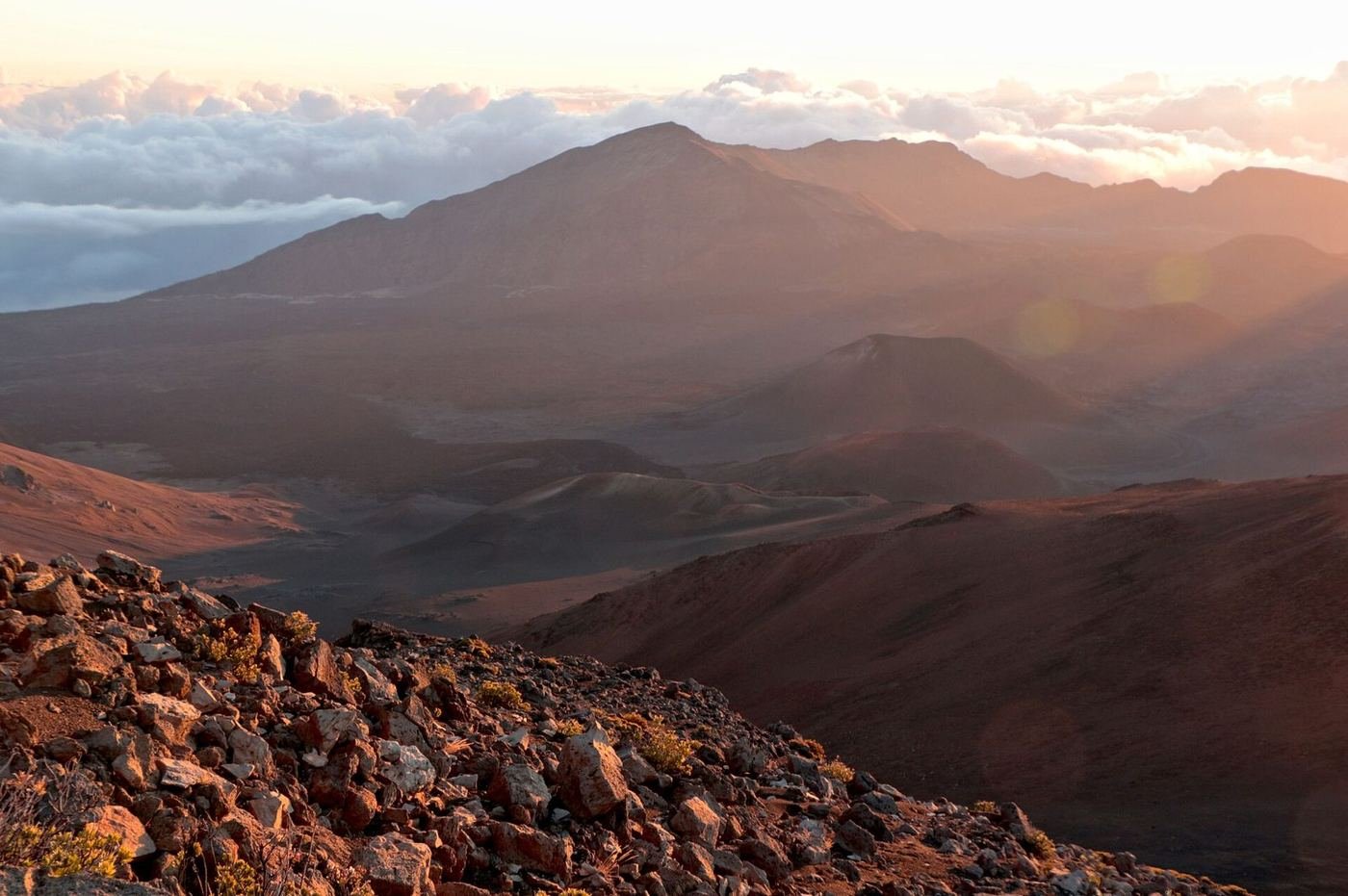
Haleakalā rises 10,023 feet above the Pacific on Maui, with a huge volcanic crater at the top and a lush coastal valley on the far side. It's two parks in one, and this is how I'd rank what's worth doing.
Best Time of Year to Visit, and Why
The park is open year-round, and I'd go in spring or fall. The summit is cold at any time of year, and the weather can change fast, but the shoulder seasons have fewer crowds and often clearer skies. Summer is the busiest season, and the sunrise reservations are hardest to get.
The Kīpahulu side is wettest from November through March, which can mean flooded trails and pools but also stronger waterfalls.
How Haleakalā Compares to Hawaiʻi Volcanoes
They're both Hawaiian volcano parks, so here's how I'd choose.
| Haleakalā | Hawaiʻi Volcanoes | |
|---|---|---|
| Headline | A dormant volcano with a giant crater and a sunrise above the clouds | An active volcano with lava, steam vents, and craters |
| Island | Maui | Hawaiʻi (Big Island) |
| Altitude | Up to 10,023 feet | About 4,000 feet at the summit area |
| Reservation | Sunrise requires one | Not required |
| Best for | Sunrise, stargazing, and a quiet walk in the crater | Seeing an active volcano and a bigger range of landscapes |
If I had to pick one, I'd choose Hawaiʻi Volcanoes for the active volcano. If I was already on Maui, I'd go to Haleakalā for the sunrise and the crater.
Hiking Checklist — Haleakalā National Park
Cold, altitude, and sun drive my kit here, not heat:
- A warm jacket, hat, and gloves — the summit before dawn can be near freezing.
- Sunscreen and sunglasses — the sun is intense at altitude.
- Water and snacks — there's no food service at the summit.
- A printed or saved reservation — cell service is limited.
- Good shoes — trails are rocky and loose.
- A full tank of gas — there's no fuel in the park.
The 10 Best Things to Do in Haleakalā National Park
-
1. Watch sunrise at the summit
A spectacular view above the clouds that requires a timed reservation. Dress warmly. 1–2 hrs.
-
2. Stargaze at the summit
The summit is one of the best places on Earth for stargazing, with clear, dark skies after sunset. Bring warm layers.
-
3. Walk into the crater on Sliding Sands
A descent through cinder cones in shades of red and gold. Most people go a mile or two and turn back. Up to 11 mi RT, strenuous, 4–8 hrs.
-
4. Stop at Leleiwi Overlook
A short walk to a crater overlook with a Brocken spectre at sunrise or sunset. 0.3 mi RT, easy, 20 min.
-
5. Hike the Pīpīwai Trail
A trail through a bamboo forest to the 400-foot Waimoku Falls in the Kīpahulu district. 4 mi RT, moderate, 2.5 hrs.
-
6. Drive the Road to Hāna
A winding road with hundreds of curves and dozens of one-lane bridges that leads to Kīpahulu. About 64 miles from Kahului, 2–3 hrs each way.
-
7. Look for the silversword
A rare plant that grows only on Haleakalā, visible near the summit, often blooming in summer. Please stay on the trail.
-
8. Spot nēnē at Hosmer Grove
The endangered Hawaiian goose is sometimes seen near the park entrance. Keep a distance and don't feed them.
-
9. Walk the Kūloa Point Trail
A short loop to the Pools of 'Ohe'o and the coast. 0.5 mi loop, easy, 30 min.
-
10. Hike the Halemau'u Trail
A trail down the crater wall through a lush, wetter section. 2.2–7.4 mi RT, moderate–strenuous, 2–5 hrs.
Build Your Haleakalā Trip, Free
I built ParkPlan to turn a list like this into a real day-by-day itinerary with your own dates, travelers, and budget.
Start My Haleakalā Trip → Or see my full 1, 2 & 3-day Haleakalā itineraryNearby Parks to Pair With Haleakalā
Building a longer road trip? These guides sit within a day's drive of this one.
Reservation rules, pool access, and road conditions are accurate as of publication but change — always confirm current conditions, road status, and reservation rules at nps.gov/hale before you go.