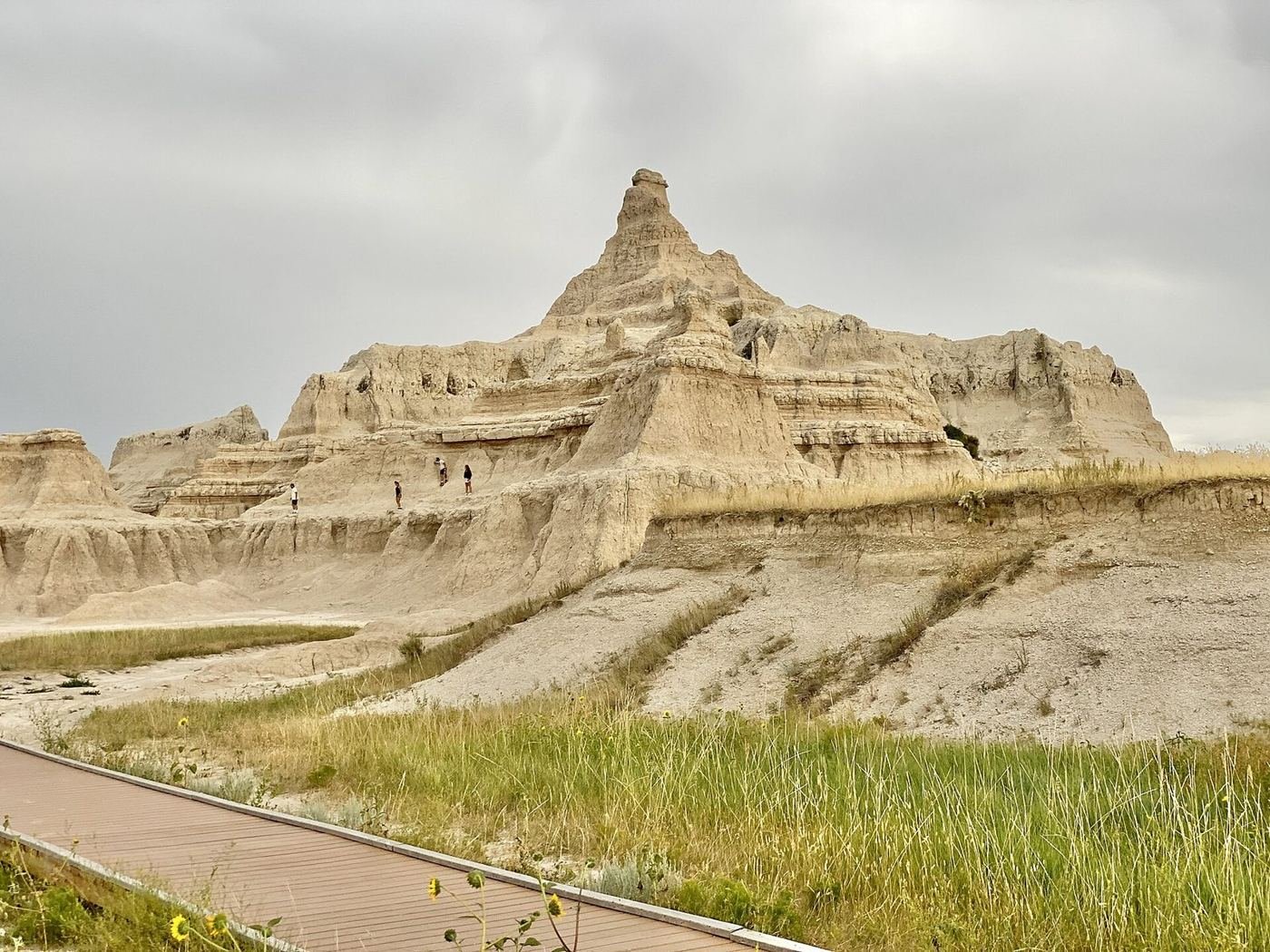
Badlands National Park packs some of the most dramatic erosion landscapes in North America into a compact loop, with a wildlife-rich prairie next door. It's an easy one-day park and a great two-day one, and this is how I'd rank what to do.
Best Time of Year to Visit, and Why
I'd go in September or early October, or in late spring. In summer the heat regularly reaches the 90s and storms build in the afternoon, but in the shoulder seasons the temperatures are comfortable, the light is softer, and the crowds are thinner. Fall also brings a good chance of seeing bison and bighorn sheep.
Winter is quiet and beautiful, but some roads close with snow and facilities are minimal.
How Badlands Compares to Theodore Roosevelt
They're both Northern Plains parks, so here's how I'd decide.
| Badlands | Theodore Roosevelt | |
|---|---|---|
| Landscape | Layered spires and ridges of eroded sandstone | Colorful badlands and the Little Missouri River |
| Wildlife | Bison, bighorn sheep, prairie dogs | Bison, wild horses, prairie dogs, elk |
| Crowds | Moderate, busy in summer | Much quieter |
| Access | Right off Interstate 90 | Off Interstate 94, farther from the Black Hills |
| Best for | A big-impact stop on a Black Hills trip | A quiet, remote park experience |
If I had to pick one, I'd choose Badlands for the drama and the convenience. I'd choose Theodore Roosevelt for solitude and a more remote feel.
Hiking Checklist — Badlands National Park
Heat, sun, and mud drive my kit here:
- A gallon of water per person per day — shade is almost nonexistent on the trails.
- A wide-brim hat and sunscreen — the prairie has no cover.
- Sturdy shoes with good grip — the clay is slick when wet and sharp when dry.
- A light jacket — the wind and early mornings can be cold.
- A full tank of gas — services are limited west of the visitor center.
- A camera with a zoom lens — wildlife is often far across the prairie.
The 10 Best Things to Do in Badlands National Park
-
1. Drive the Badlands Loop Road
The 31-mile Highway 240 passes most of the park's overlooks. Plan 2 hours of driving plus stops.
-
2. Climb the Notch Trail ladder
A log ladder and a ledge to a view over the White River Valley. Avoid it in wet weather. 1.5 mi RT, moderate, 1 hr.
-
3. Walk the Door and Window Trails
Two short boardwalk walks to eroded gaps with big views. 0.75 mi RT and 0.25 mi RT, easy, 20–45 min.
-
4. Watch sunset at Pinnacles Overlook
The formations turn gold in the last hour of light. 15–30 min.
-
5. Hike the Castle Trail
The longest trail in the park, crossing the prairie. Start at sunrise. 10 mi RT, moderate, 5–6 hrs.
-
6. See bison on the Sage Creek Rim Road
A gravel road with a good chance of bison, pronghorn, and bighorn sheep. 1–2 hrs.
-
7. Visit Roberts Prairie Dog Town
A huge colony of black-tailed prairie dogs next to the Sage Creek road. 20–30 min.
-
8. Walk the Fossil Exhibit Trail
A short boardwalk with replica fossils of ancient animals. 0.25 mi loop, easy, 15–20 min.
-
9. Look for bighorn sheep on Cliff Shelf
A short loop above the visitor center where bighorn are often seen. 0.5 mi loop, easy–moderate, 30 min.
-
10. Stargaze after dark
The park has very dark skies, and the Milky Way is visible on clear nights. Check the park's ranger-led night sky programs in summer.
Build Your Badlands Trip, Free
I built ParkPlan to turn a list like this into a real day-by-day itinerary with your own dates, travelers, and budget.
Start My Badlands Trip → Or see my full 1, 2 & 3-day Badlands itineraryNearby Parks to Pair With Badlands
Building a longer road trip? These guides sit within a day's drive of this one.
Trail conditions, road closures, and seasonal hours are accurate as of publication but change — always confirm current conditions, road status, and reservation rules at nps.gov/badl before you go.