Yellowstone is the park that finally taught me to stop planning by mileage and start planning by geography. It's bigger than Rhode Island, and it's genuinely spread across three states, so the version of the mistake I made on my first trip was trying to see Mammoth Hot Springs and Old Faithful in the same day — a drive that alone eats most of your daylight. This is the guide I wish I'd had before I went: what to do in each geographic cluster of the park, and how I'd sequence the days so I wasn't zigzagging across it.
If You Only Have 1 Day
One day means picking a single area and not fighting the drive times, and I'd pick the Old Faithful / Midway Geyser Basin cluster — it's the highest concentration of the park's most famous sights in the smallest area.
Old Faithful + Upper Geyser Basin — the one everyone comes for
Old Faithful itself erupts roughly every 60 to 110 minutes, and the visitor center posts a predicted eruption window that's genuinely reliable enough to plan around — I checked it as soon as I arrived and used the wait time to walk the boardwalk loop through the rest of Upper Geyser Basin, which has the highest concentration of geysers on Earth. Morning Glory Pool, Grand Geyser, and Castle Geyser are all within easy walking distance on the same boardwalk system. I'd budget more time here than feels necessary — the basin rewards slow walking.
Grand Prismatic Overlook + Fairy Falls Trail — the color everyone's seen in photos
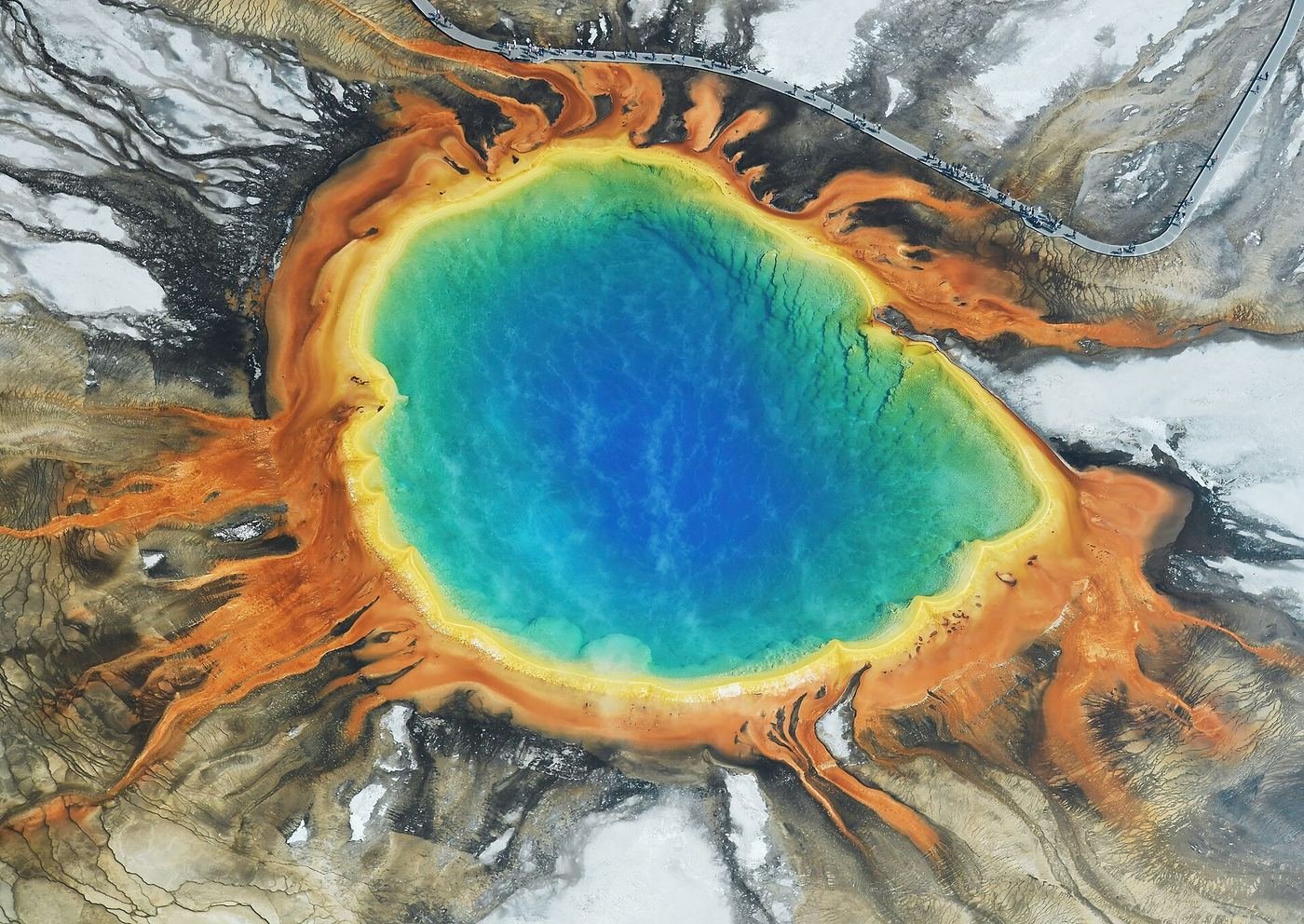
Grand Prismatic Spring is the largest hot spring in the country, and its full rainbow color genuinely doesn't read from ground level at the boardwalk — you need the overlook trail for that. Parking is the real trick here: it's at the Fairy Falls trailhead lot, a mile south of the Midway Geyser Basin boardwalk parking, not at Midway itself, and there's no trail connecting the two lots. That small lot fills before 9am in peak summer, so I'd arrive early or go later in the afternoon. I did the short overlook climb for the view, then continued on to Fairy Falls itself since I had the legs for it.
If I had energy left, I'd add Mystic Falls Loop or the Lone Star Geyser Trail — both start from trailheads in the same general area and neither requires backtracking far.
Got a 2nd Day? Here's What I'd Add — Mammoth Hot Springs Area
The Mammoth area, near the North Entrance, is a genuinely different landscape from the geyser basins — travertine terraces built up by mineral deposits instead of geysers and mudpots — and it clusters its own set of trails close together.
Mammoth Hot Springs Terraces — the centerpiece
A boardwalk winds through the Lower and Upper Terraces, where hot spring water deposits travertine in a way that constantly reshapes the terrain — some terraces that were active on my last trip were dry and chalky white on this one, and vice versa. Elk frequently graze right on the lawns of the historic Fort Yellowstone buildings nearby, which I hadn't expected the first time I saw it.
Bunsen Peak Trail — if I want elevation and a view
A steady climb to a summit view over the Gallatin Range and down into the Gardner River valley, close enough to Mammoth that I did it the same morning as the terraces. It's a popular enough trail that I didn't feel like I needed to worry about solitude-related bear encounters, but I still carried spray and made noise on the switchbacks.
If Bunsen Peak felt like too much, Wraith Falls Trail is a short, easy alternative in the same general area — barely a half-hour out-and-back to a modest waterfall, good for a slower-paced afternoon.
The Full 4 Days — Canyon Area and Beyond
By day three, I'd head to the Grand Canyon of the Yellowstone area, roughly in the middle of the park, which clusters its own set of sights around the canyon rim.
Grand Canyon of the Yellowstone (Artist Point) + Brink of the Lower Falls
Artist Point is the classic, short, paved viewpoint looking down the canyon at the Lower Falls — genuinely one of the best views in the park for almost no walking. Brink of the Lower Falls is a different experience entirely: a steep, short trail that switchbacks right down to the top of the falls themselves, loud and misty in a way the overlook isn't. I did both in the same morning since they're only a short drive apart.
If I had a fourth day, I'd spend the morning on the North Rim Trail for a longer, quieter perspective on the canyon from above, then use the afternoon for the Lamar Valley wildlife drive — often called America's Serengeti for the density of bison, elk, and, with luck and a spotting scope, wolves. I'd bring binoculars and go at dawn or dusk, when wildlife activity is highest.
Where I Ate
I split my meals between West Yellowstone, just outside the park's west entrance, and Gardiner, at the North Entrance, depending on which area I was based near that day.
Running Bear Pancake House
A West Yellowstone institution for a reason — big stacks of pancakes before an early start into the Old Faithful area.
View on Google Maps ↗Yellowstone Perk
My go-to in Gardiner before a Mammoth-area morning — solid coffee, breakfast, and ice cream for later in the day.
View on Google Maps ↗Firehole Bar-B-Que
A casual lunch stop in West Yellowstone after a morning in the geyser basins — smoked meats and a laid-back, no-fuss counter-service setup.
View on Google Maps ↗Wonderland Cafe & Lodge
A locally owned standout in Gardiner with chef-driven, seasonally changing dishes made from organic, locally sourced ingredients — I saved this for a nicer night after the Mammoth and Canyon days.
View on Google Maps ↗Madison Crossing Lounge
Housed in West Yellowstone's old schoolhouse building, with a full bar and a solid dinner menu — an easy, reliable pick after a long day in the geyser basins.
View on Google Maps ↗Old Faithful Inn Dining Room
Even if you're not staying at the inn, the dining room is worth a meal for the massive log-and-stone lodge room alone. I'd make a reservation ahead for dinner — it's the most requested lodging and dining spot in the park for good reason.
View on Google Maps ↗Where I Stayed
Old Faithful Inn
The most famous lodge in the National Park System — a massive log structure right by the geyser itself. Book 12 or more months ahead for peak summer; it's genuinely the hardest reservation in the park to land.
View on Google Maps ↗West Yellowstone or Gardiner, MT
This is where I based myself most nights — right outside the West or North Entrance, with far more lodging variety and lower prices than in-park options, and short drives into whichever area I was covering that day.
View on Google Maps ↗Madison or Canyon Campground
In-park camping options that put you close to either the geyser basins or the canyon area depending on which one you book. Reservations fill fast for summer — I'd book as early as the system allows.
View on Google Maps ↗Build This Exact Trip, Free
I built ParkPlan because I wanted this kind of plan for every park, not just the one I happened to write up. It turns this into a real day-by-day itinerary with your own dates, travelers, and budget.
Start My Yellowstone Trip → Or see full park details first at parkplan.org/?park=yellowstoneNearby Parks to Pair With Yellowstone
Building a longer road trip? These guides sit within a day's drive of this one.
Trail stats, road status, and pricing are accurate as of publication but change — always confirm current conditions and geyser eruption predictions at nps.gov/yell before you go.