Yellowstone drew roughly 4.76 million visitors in 2025, its second-busiest year on record, and the vast majority of them see the park through the windshield of a car creeping toward a bison jam. That's not really a complaint — the wildlife and geothermal features genuinely are that good — but the park rewards getting out of the car more than most people realize. Here's my real list, plus the planning details that actually change how good your trip is.
Best Time of Year to Visit, and Why
I'd go in June or September if I had to pick, with July and August only if full road access matters more to you than crowds. Here's my honest reasoning: Yellowstone sits at high elevation across three states, and its interior roads — especially the ones connecting Mammoth, Old Faithful, and Canyon — don't fully open until sometime in the spring, with the whole system typically running at full capacity only from July through August. That's also peak wildlife season for predictable sightings, but it's peak crowd season too, with the Old Faithful area and Grand Prismatic parking lots filling before mid-morning. June gives you fuller waterfalls from snowmelt and (usually) full road access with somewhat thinner crowds than midsummer. September is my personal favorite — cooler temperatures, the elk rut starting to pick up in places like Mammoth, and noticeably lighter traffic, though some high-elevation campgrounds and facilities start closing for the season as the month goes on.
How Yellowstone Compares to Grand Teton
I get asked constantly whether someone should do Yellowstone or Grand Teton if they only have time for one, so here's my honest comparison — especially since they share an entrance fee and sit just a 10-mile drive apart:
| Yellowstone | Grand Teton | |
|---|---|---|
| Size | ~3,500 sq mi across WY/MT/ID | ~484 sq mi, all in Wyoming |
| Signature feature | Geysers, hot springs, and mudpots — Old Faithful, Grand Prismatic | Dramatic mountain skyline rising straight from the valley floor |
| Accessibility | Many top sights reachable from boardwalks and short paved paths | More rewarding for hikers; fewer big sights visible from the car |
| Crowds | 4.76M+ visitors in 2025 — busier and more spread thin over distance | Roughly a million fewer visitors a year |
| Best for | Wildlife, geology, and travelers who don't want to hike far for the highlights | Hikers, shorter trips, and anyone who wants a quieter, more compact park |
If I had to pick just one, I'd pick Yellowstone for the sheer variety of what's here — but given how close they sit to each other, I'd genuinely try to do both on the same trip rather than choose. Even a single extra day tacked onto a Yellowstone trip to drive Grand Teton's park road is worth it.
Hiking Checklist — Yellowstone National Park
Obviously, for anything beyond a boardwalk stroll, you'll want real hiking gear, not just sneakers and a water bottle. Here's what I actually bring on every hike in Yellowstone:
- EPA-approved bear spray, worn on your body — not packed away. The park service specifically recommends a quick-draw holster; bear spray has been shown to be highly effective at stopping aggressive bear behavior, but only if you can actually reach it in time.
- A 2–3L hydration reservoir — high elevation and dry air mean you dehydrate faster than you'd expect, especially on longer trails like Mount Washburn.
- Layers, even in summer — mornings at elevation can start near freezing even when the afternoon climbs into the 70s or 80s.
- Real hiking boots — boardwalk areas are flat and easy, but trails like Bunsen Peak and Mount Washburn have real elevation gain and loose rock.
- Binoculars or a spotting scope — for wildlife viewing at a safe distance in places like Lamar Valley, rather than approaching animals for a closer look.
- A headlamp — useful for early starts to beat the crowds at Grand Prismatic or Old Faithful, or if a hike runs longer than planned.
- Sunscreen and a hat — high elevation means stronger UV exposure than the temperature alone suggests.
The 10 Best Things to Do in Yellowstone National Park
-
1. Old Faithful and Upper Geyser Basin
The park's most famous sight, erupting roughly every 60 to 110 minutes with a predicted window posted at the visitor center. The surrounding Upper Geyser Basin boardwalk has the highest concentration of geysers on the planet, including Grand Geyser and Morning Glory Pool. 2–5 mi of boardwalk, easy, 2–4 hrs.
-
2. Grand Prismatic Spring and the Overlook Trail
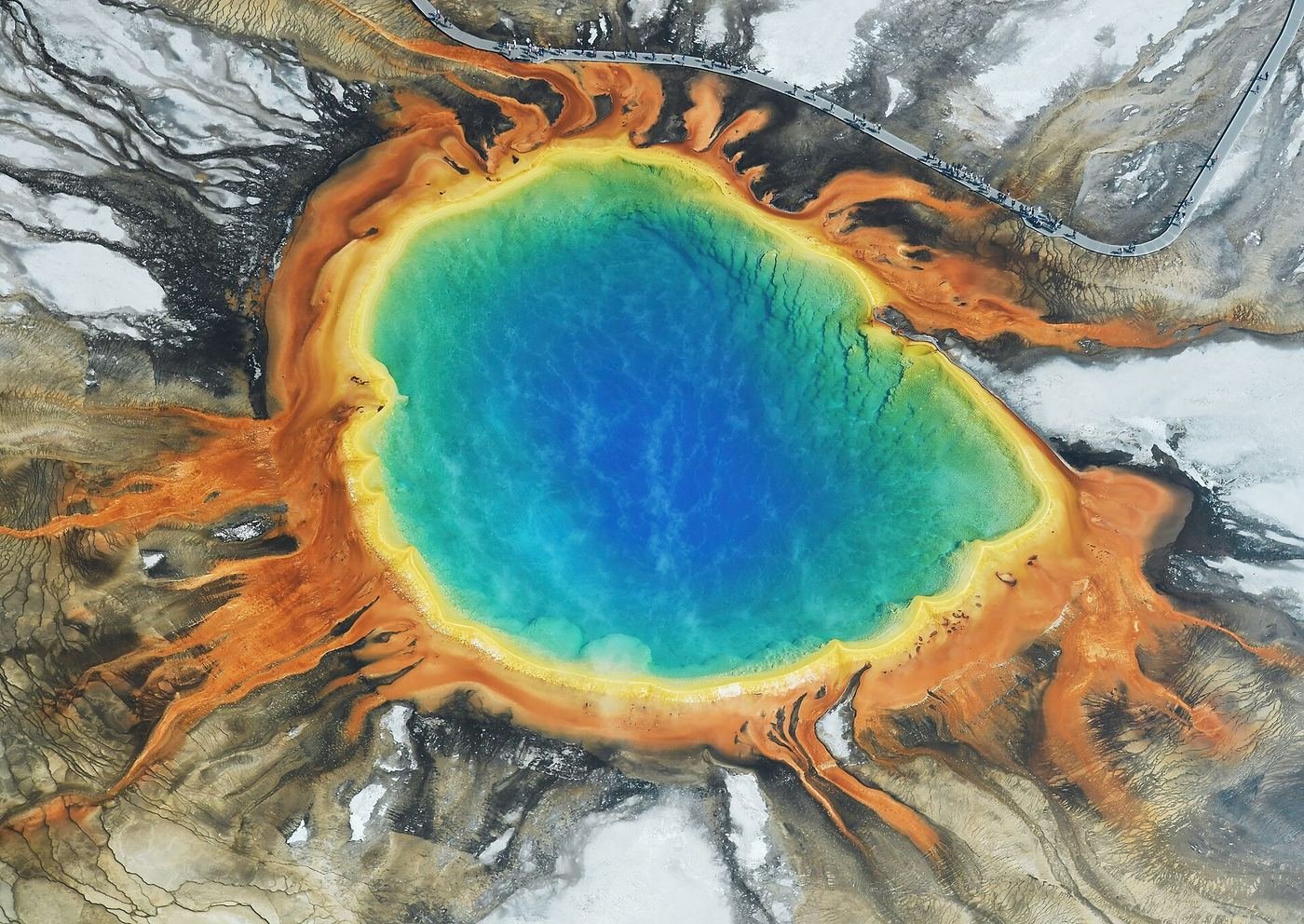
The largest hot spring in the country, whose full rainbow coloring only really shows from the elevated overlook trail rather than the boardwalk at ground level. Park at the Fairy Falls trailhead lot, not the Midway Geyser Basin lot — the two aren't connected by trail. 1.6 mi RT, moderate, ~1 hr.
-
3. Grand Canyon of the Yellowstone (Artist Point)
A short, paved overlook delivering one of the best views in the park — the Yellowstone River's Lower Falls dropping through a canyon of yellow and orange rock. Pair it with the steeper Brink of the Lower Falls trail if you want to get close to the falls themselves. 0.2 mi RT, easy, ~1 hr.
-
4. Mammoth Hot Springs Terraces
A boardwalk through constantly shifting travertine terraces built up by mineral-rich hot spring water — the active and dormant sections change from year to year. Elk are frequently seen grazing on the lawns of the nearby historic buildings. 1–2 mi of boardwalk, easy, 1–2 hrs.
-
5. Lamar Valley Wildlife Drive
Often called America's Serengeti for its density of bison, elk, pronghorn, and — with luck, a spotting scope, and an early start — wolves. Best at dawn or dusk. A scenic drive rather than a hike, best done slowly with frequent pullouts.
-
6. Mystic Falls Loop
A moderate loop near the Old Faithful area climbing to a waterfall and a good overlook of the geyser basin below, with noticeably fewer crowds than the boardwalks it starts near. 2.4 mi loop, moderate, 2–4 hrs.
-
7. Mount Washburn
One of the best summit views in the park, reachable via either Dunraven Pass or the gentler Chittenden Road route, both converging near a staffed fire lookout at the top with views over the Absaroka Range and Yellowstone Lake on a clear day. Via Chittenden Road: 5.8 mi RT, moderate, 3–5 hrs.
-
8. West Thumb Geyser Basin
A small, easy boardwalk loop where geothermal features meet the shore of Yellowstone Lake directly — a genuinely different setting than the inland basins, with steam rising right off the lakeshore. 0.5 mi loop, easy, 30–60 min.
-
9. Bunsen Peak Trail
A steady climb near Mammoth to a summit view over the Gallatin Range and the Gardner River valley — popular enough to feel safe hiking without a large group, though bear spray and noise-making are still smart practice. 4.6 mi RT, moderate, 2–3 hrs.
-
10. Stay for the Night Sky and Wildlife at Dawn
Yellowstone's remote interior means genuinely dark skies away from the developed areas, and the same early hours that reward stargazers also happen to be when wildlife is most active near the roads. If you can manage one early morning or late evening outside a car in an open valley like Hayden or Lamar, it's worth losing the sleep.
Build Your Yellowstone Trip, Free
I built ParkPlan to turn a list like this into a real day-by-day itinerary with your own dates, travelers, and budget.
Start My Yellowstone Trip → Or see my full 1–4 day Yellowstone itineraryNearby Parks to Pair With Yellowstone
Building a longer road trip? These guides sit within a day's drive of this one.
Trail stats, access details, and closures are accurate as of publication but change — always confirm current conditions and road status at nps.gov/yell before you go.