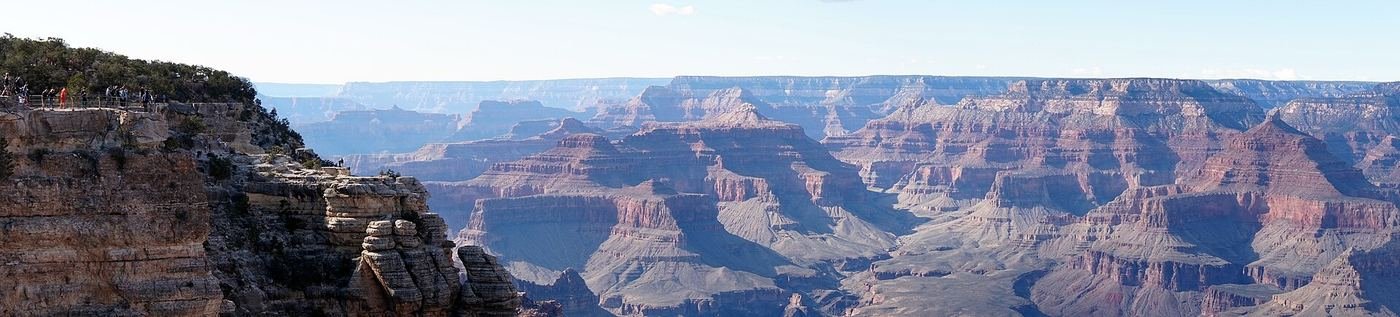
The Grand Canyon pulled in about 4.9 million recreational visitors in 2024, making it one of the three or four most-visited national parks in the country most years. Almost all of that traffic goes to a small cluster of South Rim overlooks and the top mile or two of two trails. That's not a bad instinct — those spots are famous for good reason — but there's a lot more here, on both rims, if you're willing to walk a little farther or drive a little longer. Here's my real list, plus the planning details that actually change how good your trip is.
Best Time of Year to Visit, and Why
I'd go in March through May or September through November — here's my honest reasoning, not just a repeated rule of thumb. The South Rim sits above 6,800 feet, so it's genuinely pleasant even when it's brutally hot down in the inner canyon; but the inner canyon itself regularly tops 100°F from June through August, which is exactly when the corridor trails are most dangerous for hikers who underestimate the return climb. Shoulder-season temperatures make hiking below the rim far safer without the peak-summer crowds. Winter on the South Rim is cold but the park stays open and gets genuinely magical with snow dusting the canyon rim; the North Rim, by contrast, closes for the season in mid-fall and doesn't reopen until mid-May.
South Rim vs. North Rim
I get asked constantly whether someone should visit the South Rim or the North Rim, so here's my honest comparison rather than a dodge:
| South Rim | North Rim | |
|---|---|---|
| Access | Open year-round, easy drive from Phoenix or Flagstaff | Closed roughly mid-Oct to mid-May; longer drive from anywhere |
| Elevation | ~6,800 ft | ~8,000+ ft — noticeably cooler, more forested |
| Crowds | The vast majority of all park visitors | A small fraction — some overlooks feel nearly empty |
| Signature trails | South Kaibab, Bright Angel, the Rim Trail | Bright Angel Point, Transept, Widforss, Cape Final |
| Best for | First-timers, families, anyone on a shorter trip | Repeat visitors who want solitude and don't mind the drive |
If it's your first trip, go South Rim — it's not close. The North Rim is genuinely worth it on a future trip when you have more time to dedicate to getting there and back, since it's roughly a five-hour drive around the canyon from the South Rim, not a quick side trip.
Hiking Checklist — Grand Canyon National Park
This is a dry, exposed, and often extremely hot park where the danger is almost always heat, not cold. Here's what I actually bring on every hike below the rim:
- More water than feels reasonable — at least a gallon per person for any hike of a few hours or more in warm weather, since several corridor trails have no water at all outside specific seasonal spigots.
- Electrolyte tablets or packets — plain water alone isn't enough once you're sweating heavily in a dry desert heat; rangers see heat-related illness from underestimating this constantly.
- A wide-brim hat and a lightweight long-sleeve sun shirt — most of the corridor trails have zero shade for hours at a stretch.
- Trekking poles — the descent is steep and loose in places, and poles save your knees on the climb back out even more than on the way down.
- Salty snacks, not just sweet ones — you're replacing sodium as much as calories on a hot descent-and-reclimb hike.
- A real turnaround-time plan, set before you start — decide your latest possible turnaround point before you leave the rim, and honor it even if you feel great; the trail down always feels easier than the trail back up.
- High-SPF sunscreen, reapplied often — there's no canopy anywhere on the main corridor trails.
The 10 Best Things to Do in Grand Canyon National Park
-
1. South Kaibab Trail to Ooh Aah Point
The best view-to-effort ratio in the park — an exposed ridgeline trail with sweeping views starting almost immediately. No water on the trail except a seasonal spigot at the trailhead, and no shade at all. 1.8 mi RT, moderate, 1–2 hrs.
-
2. Bright Angel Trail to Havasupai Gardens
A full-day push to a spring-fed, genuinely green oasis nearly halfway to the river, with seasonal water stops along the way that South Kaibab lacks. Start at first light in warmer months. 9.2 mi RT, strenuous, 6–9 hrs.
-
3. Rim Trail (South Rim)
Mostly paved, mostly flat, and connected to the free shuttle system the entire way, so you can walk any stretch and hop off whenever you're done. The easiest way to rack up big miles and big views with zero elevation risk. Up to 13 mi total, easy, 1–4 hrs.
-
4. Sunset at Hopi Point
The single most popular sunset viewpoint on the South Rim, and for good reason — it juts farther into the canyon than most overlooks for one of the widest unobstructed views anywhere on the rim. Get there at least 45 minutes early via the Hermit Road shuttle. Easy, ~1 hr.
-
5. Desert View Drive
A 25-mile scenic drive along the eastern South Rim to the Mary Colter-designed Desert View Watchtower, with several quieter overlooks along the way. A good full-day counterpoint to the busier village area. 25 mi one-way, easy, 2–3 hrs.
-
6. Hermit Trail to Dripping Springs
An unmaintained, less-traveled trail (no mule traffic, no rangers stationed along it) leading to a genuinely unusual spring that drips continuously from an overhang. A quieter, more rugged alternative to the two main corridor trails for experienced hikers. 7 mi RT, strenuous, 5–6 hrs.
-
7. Grandview Trail to Horseshoe Mesa
A historic mining-era trail, steeper and rockier than the corridor trails, leading to a broad mesa with old mine ruins and views in nearly every direction. One of the more demanding day hikes on the South Rim. 6.4 mi RT, very strenuous, 5–7 hrs.
-
8. Widforss Trail (North Rim)
A quiet, forested trail along the North Rim through ponderosa pine and aspen to a dramatic overlook — a completely different feel from the exposed South Rim trails, and a fraction of the foot traffic. 10 mi RT, moderate, 5–6 hrs.
-
9. Bright Angel Point Trail (North Rim)
A short, paved walk right from the Grand Canyon Lodge on the North Rim to a narrow finger of rock with views down both sides of the canyon — the North Rim's easiest and most rewarding short walk. 0.5 mi RT, easy, ~30 min.
-
10. Cape Final Trail (North Rim)
An easy, mostly flat walk through forest to one of the North Rim's best and least-crowded viewpoints, looking out over the eastern canyon. A good pick for anyone who's made the long drive to the North Rim and wants a rewarding hike without a serious climb. 4 mi RT, moderate, ~2 hrs.
Build Your Grand Canyon Trip, Free
I built ParkPlan to turn a list like this into a real day-by-day itinerary with your own dates, travelers, and budget.
Start My Grand Canyon Trip → Or see my full 1, 2 & 3-day Grand Canyon itineraryNearby Parks to Pair With Grand Canyon
Building a longer road trip? These guides sit within a day's drive of this one.
Trail stats, access details, and closures are accurate as of publication but change — always confirm current conditions at nps.gov/grca before you go.