Grand Teton pulled in 3.6 million recreation visits in 2024, its second-busiest year on record, and most of them are on their way to or from Yellowstone an hour up the road. That's a shame, because this park doesn't need to borrow anyone's spotlight — the range rises straight out of the valley floor with no foothills to soften the effect, and the hiking here puts you into real alpine terrain faster than almost anywhere else I've been. Here's my real list, plus the planning details that actually change how good your trip is.
Best Time of Year to Visit, and Why
I'd go June through September, and here's my honest reasoning rather than a repeated rule of thumb: this is high-elevation mountain terrain, and the good trails — Cascade Canyon, Delta Lake, anything above Jenny Lake — can hold snow and ice well into June some years, which makes them genuinely dangerous rather than just uncomfortable. July and August are the most reliable window for the high country and also the busiest, with parking lots at Jenny Lake and Lupine Meadows filling before 8am on clear days. September brings thinner crowds, cooler air, and aspen color starting to turn, but nights get cold fast and an early snowstorm is always possible. I wouldn't plan a trip centered on the high-alpine hikes outside of July and August unless I'd checked current trail conditions first.
How Grand Teton Compares to Yellowstone
I get asked constantly whether someone should do Grand Teton or Yellowstone if they only have time for one, so here's my honest comparison rather than a dodge:
| Grand Teton | Yellowstone | |
|---|---|---|
| Terrain | Jagged alpine peaks rising straight from the valley floor | Vast geothermal plateau — geysers, hot springs, canyons |
| Size | Small enough to see the road-accessible highlights in a day | Far larger, with five separate gateway areas |
| Signature feature | The peaks themselves — hiking puts you in the alpine fast | Old Faithful and thousands of other geothermal features |
| Crowds | Busy, but roughly a million fewer visitors a year than Yellowstone | One of the most-visited parks in the country |
| Best for | Hikers and photographers, or anyone short on time | First-timers, families, and anyone who wants big payoff with less hiking |
If I had to pick just one, I'd pick Yellowstone for a first trip with kids or if hiking isn't the point, and Grand Teton if you're a hiker or you've already done Yellowstone before. But they sit about an hour apart and the same entrance fee covers both parks for seven days — if you can swing a week, I'd genuinely do both back to back rather than choose.
Hiking Checklist — Grand Teton National Park
This is real grizzly and black bear country at real elevation, so my kit here looks a little different than what I'd bring to a desert park. Here's what I actually carry on every hike in Grand Teton:
- Bear spray, carried on your hip, not in your pack — mandatory in spirit if not by law any time you're away from a developed area. It does no good buried under your lunch.
- A 2–3L hydration reservoir — the alpine air is dry and you're working harder than you think at 6,800+ feet of base elevation.
- Real hiking boots with ankle support — the boulder-field scrambles on trails like Delta Lake are not sneaker terrain.
- Layers, including a real insulating layer — mornings at the trailhead can be near freezing even in July, and it warms up fast once the sun clears the canyon walls.
- A packable waterproof rain shell — mountain weather here turns in minutes, and afternoon thunderstorms are common in summer.
- A paper map or downloaded offline map — cell service disappears fast once you're off the main park road, and unmarked routes like Delta Lake have no signage to rely on.
- A headlamp — for an early-alpine-start hike or a long day that runs later than planned.
The 10 Best Things to Do in Grand Teton National Park
-
1. Hike to Delta Lake
The park's best payoff-to-fame ratio, and the one everyone's heard of before they arrive. There's no official maintained trail for the last half-mile — you follow an unmarked boot path across two boulder fields to reach a turquoise lake sitting directly beneath the Grand Teton's east face. No permit needed, just routefinding nerve. 7.6 mi RT, strenuous, 5–6 hrs.
-
2. Take the Boat Across Jenny Lake to Hidden Falls & Inspiration Point
The shuttle boat ($20 RT, cash or card at the dock) cuts out the long walk around the lake and gets you straight to the short, well-marked climb to Inspiration Point, which looks back down over Jenny Lake to the valley floor. 1.7 mi RT from the boat dock, easy-moderate, 1–2 hrs.
-
3. Walk Into Cascade Canyon
Take the boat shuttle to skip the flat approach, then follow the canyon between Teewinot and the Grand Teton back to where the trail splits at the Forks — toward Lake Solitude or Hurricane Pass. Even a partial walk in is one of the best easy-access mountain views in the park, and it's prime moose habitat. 8.8 mi RT from the boat dock, moderate, 5–9 hrs.
-
4. Catch Sunrise at Mormon Row or Schwabacher Landing
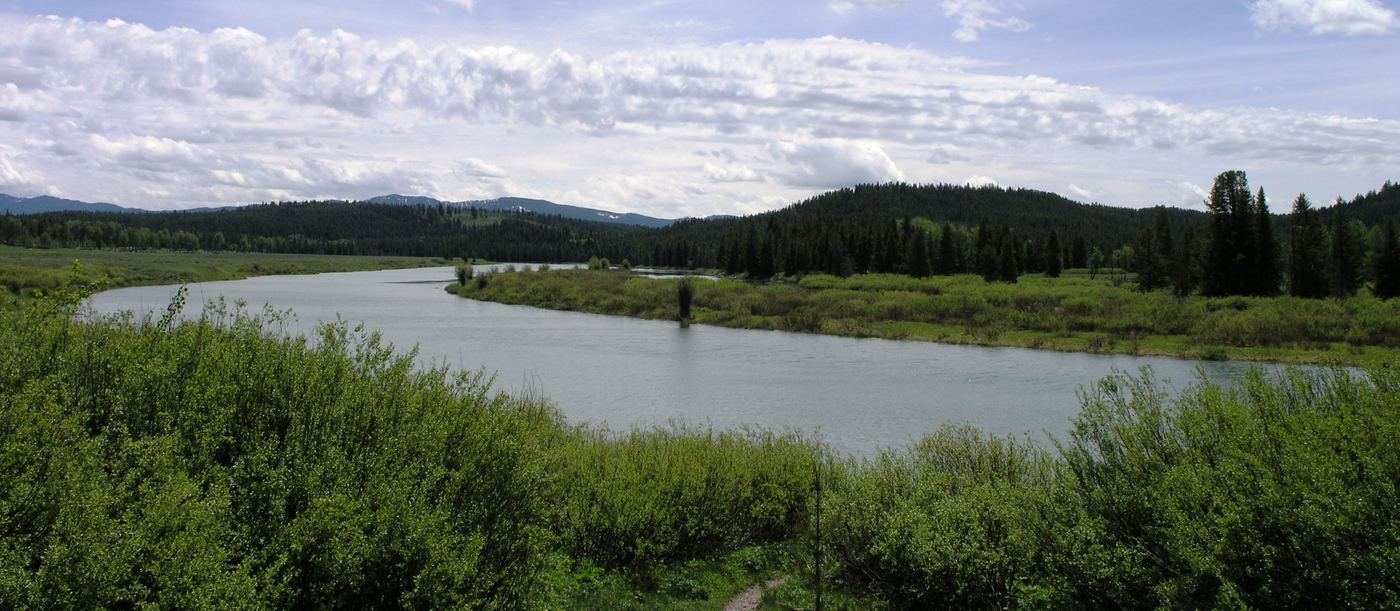
Two classic, nearly-zero-effort viewpoints — the historic barns at Mormon Row with the range as a backdrop, or the Snake River's braided channels at Schwabacher Landing, still enough most mornings to mirror the peaks. Both are a five-minute walk from the parking area.
-
5. Loop Taggart Lake and Bradley Lake
Two glacial lakes on one loop, passing through the regrown forest of the 1985 Beaver Creek burn. Quieter than the Jenny Lake side of the park despite an easy trailhead right off the main road. 5.9 mi loop, moderate, 3–4 hrs.
-
6. Drive (or Hike) Signal Mountain for the Wide Valley View
A paved summit road gets you a sweeping view of the entire valley and range without a step of hiking, or you can earn the same view on foot via the Signal Mountain Summit Trail — 6.7 mi RT, moderate, 3–4 hrs — if you'd rather work for it.
-
7. Float the Snake River
A calm-water scenic float, not whitewater — I'd book a guided trip through one of the outfitters in Jackson or Moose. It's the best way to see the range from the valley floor without driving, and a good option for a rest-day activity between big hikes. About 10 miles, 3 hrs, easy.
-
8. Walk the String Lake and Leigh Lake Loops
Flat, family-friendly trails along two of the park's clearest lakes, with String Lake shallow and warm enough for wading on a hot afternoon — rare for a mountain lake at this elevation. Good options if you want a real trail without a real climb. String Lake Loop: 3.4 mi loop, easy, 2–3 hrs.
-
9. Hike Amphitheater Lake for the Long View
The maintained trail that shares a trailhead with Delta Lake but keeps climbing past it to a genuinely alpine lake tucked into a rock amphitheater above treeline. It's the harder, longer, fully-maintained alternative if you want the elevation without the routefinding. 9.6 mi RT, strenuous, 5–7 hrs.
-
10. Watch Wildlife Along the Antelope Flats and Moose-Wilson Roads
Grand Teton has some of the most reliable roadside wildlife viewing of any park I've been to — pronghorn on Antelope Flats, moose along the Moose-Wilson Road, and black bears occasionally visible from a safe pullout distance. I kept binoculars in the car and treated slow drives at dawn and dusk as their own activity, not just transit time.
Build Your Grand Teton Trip, Free
I built ParkPlan to turn a list like this into a real day-by-day itinerary with your own dates, travelers, and budget.
Start My Grand Teton Trip → Or see my full 1, 2 & 3-day Grand Teton itineraryNearby Parks to Pair With Grand Teton
Building a longer road trip? These guides sit within a day's drive of this one.
Trail stats, access details, and closures are accurate as of publication but change — always confirm current conditions and bear activity closures at nps.gov/grte before you go.