Joshua Tree draws close to three million visitors a year, and most of them do the same loop along Park Boulevard between Hidden Valley and Keys View. That's a genuinely good day — but the park is bigger and more varied than the postcard boulder shots suggest, and it has a real second half most people never see. Here's my honest list, plus the planning details that actually change how good your trip is.
Best Time of Year to Visit, and Why
I'd go between October and April, and this isn't a soft preference — it's a real heat-avoidance story. Joshua Tree sits at the meeting point of the Mojave and Colorado deserts, and summer daytime highs routinely clear 100°F with no shade on almost any trail in the park. People do get seriously hurt here every summer from underestimating that heat on hikes that look short on a map. Spring (March–April) is the most popular shoulder-season window because of the chance of wildflowers after a wet winter, but it's also when the park is busiest and the small trailhead lots fill earliest. I'd lean toward late fall or winter if crowds bother you more than a cold morning does — days are still comfortably warm for hiking, and the nights (which can drop well below freezing) are part of the appeal if you're camping under some of the darkest skies in Southern California.
How Joshua Tree Compares to Death Valley
These two get cross-shopped constantly since they're both desert parks within a few hours of each other, so here's my honest comparison rather than a dodge:
| Joshua Tree | Death Valley | |
|---|---|---|
| Terrain | Boulder piles and Joshua tree woodland at 3,000–5,000 ft | Vast open basin, with Badwater Basin at 282 ft below sea level |
| Signature hike | Ryan Mountain, Hidden Valley — short, approachable trails | Golden Canyon, Mosaic Canyon — bigger distances, more remote |
| Entrance fee | $30/vehicle (7-day) | $30/vehicle (7-day) |
| Crowds | Busier — close to three million visitors a year | Quieter and far more spread out, given its much larger size |
| Best for | Rock climbers, bouldering, an easy weekend from LA or Palm Springs | Extreme-landscape seekers who want real remoteness and solitude |
If I had to pick just one, I'd pick Joshua Tree for an easy weekend with more approachable hikes, and Death Valley for the sheer scale and solitude — but they're close enough together, especially with Mojave National Preserve in between, that a multi-day desert-parks loop is a genuinely good way to see all three.
Hiking Checklist — Joshua Tree National Park
This is dry, exposed desert with real rock-scrambling terrain, which changes what's actually worth packing compared to a forested or alpine park. Here's what I bring on every hike here:
- More water than you think you need — there's no reliable water source on almost any trail in the park, and the dry air here hides how much you're actually losing.
- A wide-brim hat and real sun protection — there's essentially zero natural shade on the park's signature trails.
- Sturdy shoes with a grippy sole — a lot of the best terrain here is granite scrambling and loose decomposed sand, not maintained dirt trail.
- A paper map or downloaded offline map — cell service is spotty to nonexistent through most of the park, and the boulder-field trails (Hidden Valley especially) are easy to lose your bearings in.
- Layers for a cold start or a cold night — desert temperature swings are real; a warm afternoon can start with a genuinely cold sunrise, especially camping in winter.
- A basic first-aid kit — the granite here is sharp, and scrapes from scrambling are common even on "easy" trails.
- A headlamp — for a pre-dawn Ryan Mountain start to beat both heat and crowds, or for stargazing after dinner.
The 10 Best Things to Do in Joshua Tree National Park
-
1. Hidden Valley Trail
The classic first stop for a reason — a flat, easy loop through a natural rock-walled basin with a real history as a reported hideout for 1800s cattle rustlers. Get there early; the small lot fills fast. 1 mi loop, easy, 1 hr.
-
2. Ryan Mountain Trail
The best view in the park for the effort it asks — short but steep and steady the whole way, ending in a 360-degree view over Lost Horse and Queen Valleys. 3 mi RT, 1,050 ft gain, strenuous, 1.5–2.5 hrs.
-
3. Skull Rock Trail
The rock itself is visible from the road in five minutes, but the full loop through the surrounding Jumbo Rocks boulder field is quieter and just as good. 1.7 mi, easy, 1–2 hrs.
-
4. Keys View
A short paved walk to an overlook above the Coachella Valley, with the Salton Sea visible on a clear day and the San Andreas Fault tracing the valley floor below. Best at sunset. 0.25 mi RT, easy, 30 min.
-
5. Barker Dam
An easy loop to a small ranching-era dam with genuine Native American petroglyphs along the route, and one of the more reliable spots in the park to see wildlife coming to drink. 1.1 mi, easy, 1 hr.
-
6. Cholla Cactus Garden
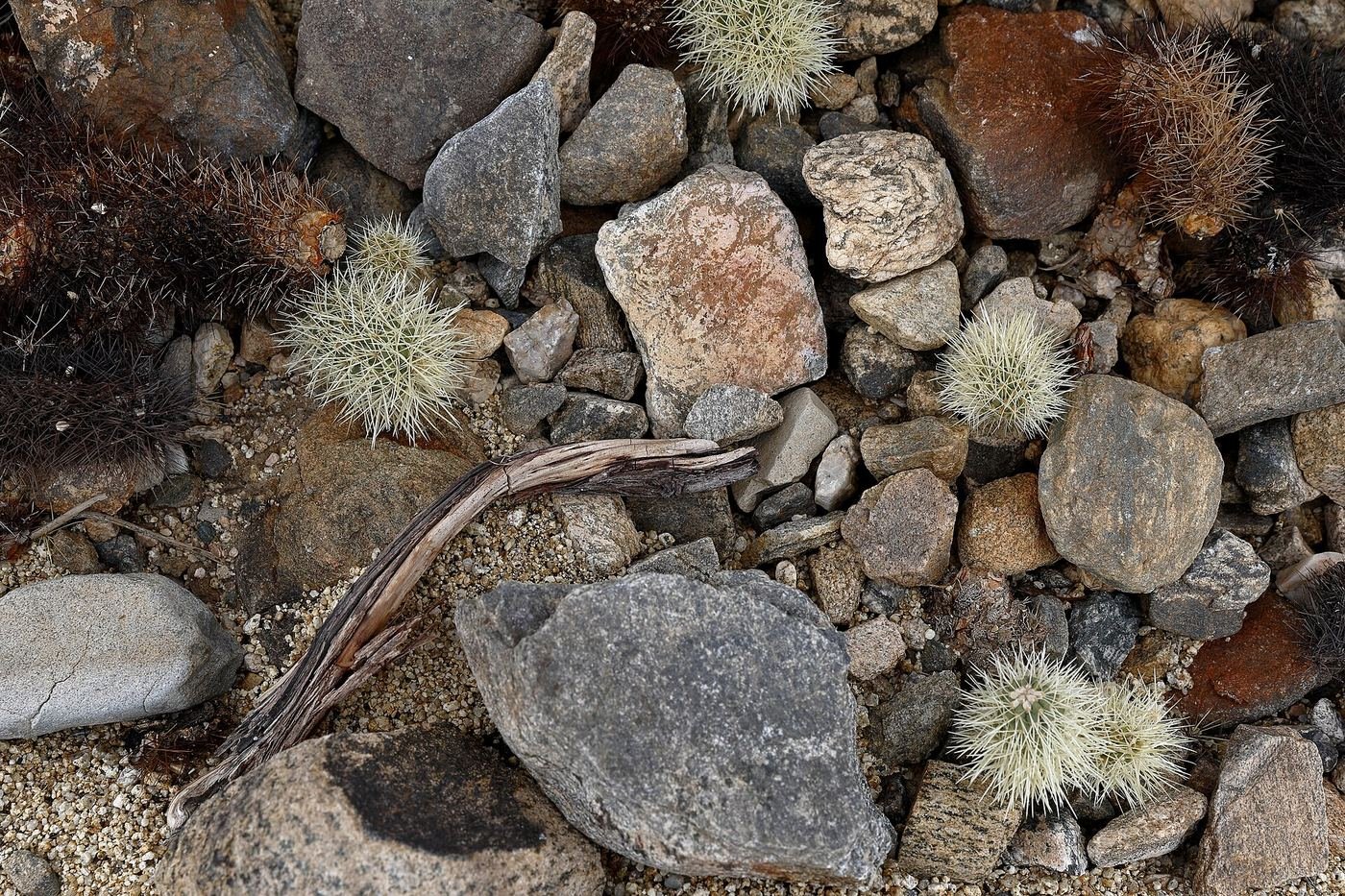
A short, easy boardwalk loop through a dense stand of "teddy-bear" cholla — deceptively fuzzy-looking cacti with spines that attach to anything that brushes past. Worth the quick stop off the road between the park's north and south sections. 0.25 mi, easy, 15–30 min.
-
7. Arch Rock
A short, easy trail to one of the park's most photogenic natural rock arches, in the Jumbo Rocks/White Tank area. A good quick stop to pair with Skull Rock. 1.4 mi, easy, 1 hr.
-
8. Lost Horse Mine Trail
A moderate hike to the remains of a real 1890s gold mine and stamp mill — a quieter, less-photographed piece of the park's history than the boulder formations most people come for. 4 mi RT, moderate, 2–3 hrs.
-
9. Mastodon Peak Trail, Cottonwood Spring
Down in the park's quieter south end, a loop past an old mining claim to a rocky summit view toward the Salton Sea, paired easily with the short walk to the Cottonwood Spring fan-palm oasis itself. 3 mi loop, moderate, 1.5–2.5 hrs.
-
10. Fortynine Palms Oasis Trail
A steep, strenuous climb up near the park's north entrance to a real desert fan-palm oasis, a genuinely different payoff than the boulder-and-Joshua-tree scenery most of the park is known for. This trail had a weekday repair closure for storm damage earlier in 2026, so I'd confirm it's fully open before planning around it. 3 mi RT, strenuous, 2–3 hrs.
Build Your Joshua Tree Trip, Free
I built ParkPlan to turn a list like this into a real day-by-day itinerary with your own dates, travelers, and budget.
Start My Joshua Tree Trip → Or see my full 1, 2 & 3-day Joshua Tree itineraryNearby Parks to Pair With Joshua Tree
Building a longer road trip? These guides sit within a day's drive of this one.
Trail stats, access details, and closures are accurate as of publication but change — always confirm current conditions at nps.gov/jotr before you go.