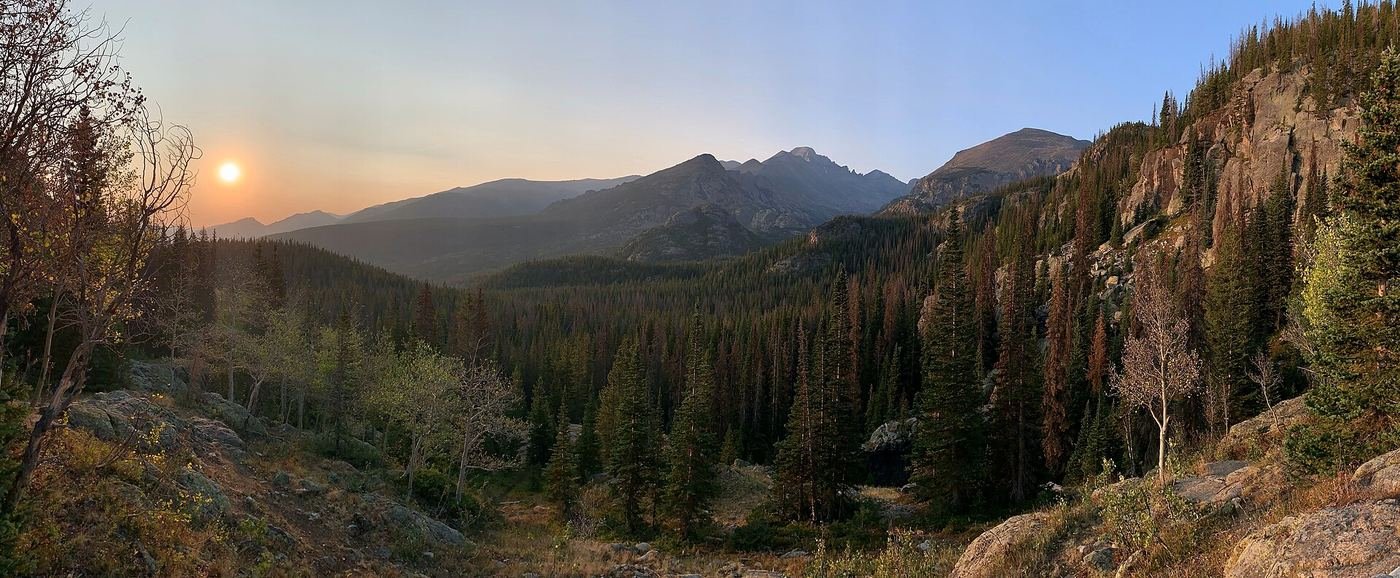
Rocky Mountain pulled in over 4.1 million visitors in 2025, making it the 6th most-visited national park in the country — and nearly all of them funnel through the same Bear Lake corridor. That's not a knock on Bear Lake; it earns the crowds. But there's a lot more park on the other side of Trail Ridge Road, and I'd feel bad sending you home without at least pointing you toward it. Here's my real list, plus the planning details that actually change how good your trip is.
Best Time of Year to Visit, and Why
I'd go in July, August, or the first half of September, and here's my honest reasoning rather than a repeated rule of thumb: Trail Ridge Road, the only road that crosses the park, is typically only fully open from around Memorial Day weekend through some point in October — it's closed the rest of the year for snow, and the exact closing date moves with the weather each fall. Timed-entry reservations are required for the entrance gate and separately for Bear Lake Road roughly late May through mid-October, which means the very end of that road-open window — after the reservation requirement lifts but before the road closes for the season — can be the sweet spot: fewer people, no permit to chase, and the road is often still open. The tradeoff is weather. Afternoon thunderstorms build almost every summer day above treeline, which is why I always aimed to be off any exposed ridge by early afternoon regardless of the month.
How Rocky Mountain Compares to Glacier
I get asked constantly whether someone should do Rocky Mountain or Glacier if they only have time for one, so here's my honest comparison rather than a dodge:
| Rocky Mountain | Glacier | |
|---|---|---|
| Signature drive | Trail Ridge Road — 48 mi, tops out at 12,183 ft, the highest continuous paved through-road in the country | Going-to-the-Sun Road — 50 mi, fully open only mid-summer |
| Access in summer | Timed-entry reservation for the park and, separately, for Bear Lake Road | Vehicle reservation required for the busiest corridors |
| Getting there | ~1.5 hrs from Denver (DEN) | ~30 min from Kalispell (FCA) |
| I'd budget | 3 days | 4 days |
| Best for | Easy proximity to a major airport, a huge network of alpine lake hikes in a small area | A wilder, less-crowded feel and glacier-carved valleys on an even bigger scale |
If I had to pick just one, I'd pick Rocky Mountain if my trip also needed to work around a Denver flight, and Glacier if I had the extra travel days and wanted a quieter park. They're different enough in feel — Glacier is bigger and lonelier — that I don't think either one is the "wrong" answer.
Hiking Checklist — Rocky Mountain National Park
Obviously, for anything beyond a short walk, you'll want real hiking gear, not just sneakers and a water bottle. Here's what I actually bring on every hike in Rocky Mountain:
- A real insulating layer, even in July — the tundra above treeline runs 30–40 degrees colder than Estes Park, and the wind at 12,000 ft doesn't care what month it is.
- A packable rain shell — afternoon thunderstorms build over the peaks almost daily in summer, and you want to be below treeline before they arrive.
- A 2–3L hydration reservoir — altitude dehydrates you faster than you expect, and most of these trails have long stretches without a refill point.
- Sturdy hiking boots with ankle support — the trails past Mills Lake and toward Sky Pond get rocky and uneven, especially near the scrambles.
- Sun protection — hat, sunglasses, high-SPF sunscreen — UV exposure is noticeably stronger at altitude, even on a cool day.
- A printed or downloaded copy of your timed-entry reservation — cell service is spotty at the entrance stations, so I didn't want to be pulling up an email with no signal.
- Bear spray or basic wildlife awareness, especially near dawn/dusk — elk are everywhere and moose do turn up in the meadows; I kept well back from both, particularly during the fall rut.
The 10 Best Things to Do in Rocky Mountain National Park
-
1. Trail Ridge Road
The reason a lot of people come. It climbs to 12,183 feet, the highest point on any continuous paved through-road in the country, and connects Estes Park to Grand Lake on the park's quieter west side. Typically open Memorial Day weekend through some point in October, weather permitting. 48 mi one-way, easy, 2–3 hrs.
-
2. Emerald Lake Trail (via Nymph & Dream Lakes)
The park's signature lake chain, and deservedly so — three distinct lakes on one well-graded trail from the Bear Lake trailhead, each a little quieter and colder than the last. 3.6 mi RT, moderate, 2–3 hrs.
-
3. Sky Pond via Glacier Gorge
My pick for the best full-day payoff in the park — a scramble past Timberline Falls leads to an alpine pond ringed by the Cathedral Spires. The Glacier Gorge trailhead has only about 40 parking spots, so I started before sunrise. 9.8 mi RT, strenuous, 5–6 hrs.
-
4. Mills Lake Trail
Same trailhead as Sky Pond, but a shorter, easier day if you turn around at the lake. Long, narrow, and framed by Longs Peak — noticeably quieter than Bear Lake itself. 5.6 mi RT, moderate, 3 hrs.
-
5. Alberta Falls Trail
A short, popular warm-up (or cool-down) near the start of the Glacier Gorge corridor, ending at a photogenic cascade through a narrow granite chute. Good option if you want a taste of that trailhead without committing to the full day. 1.6 mi RT, easy-moderate, 1 hr.
-
6. Chasm Lake Trail
This is as close as most people get to Longs Peak without the technical summit push — the trail climbs to a stark alpine lake sitting directly beneath the mountain's massive east face, the Diamond. Strenuous and long, but no permit needed for the day hike. 8.4 mi RT, strenuous, 5–6 hrs.
-
7. Twin Sisters Peaks Trail
I'd send anyone here who wants a genuine summit and a straight-on view of Longs Peak without the crowds of the Bear Lake corridor. It's a real climb, but it's one of the better vantage points in the park for photographing Longs Peak itself. 7.5 mi RT, strenuous, 4–5 hrs.
-
8. Gem Lake Trail
A shorter, drier hike near Estes Park with distinctive rock formations and a small lake tucked into the granite — a good pick on a day when the Bear Lake lots are already full. 3 mi RT, moderate, 2 hrs.
-
9. Cub Lake & Fern Lake Trails
These sit on the west edge of Moraine Park and pass through open meadow that's genuinely good for spotting elk, plus a stretch of forest still recovering from the 2020 East Troublesome Fire — a different, more subdued kind of scenery than the granite peaks elsewhere in the park. Cub Lake: 4.6 mi RT, moderate, 2–3 hrs. Fern Lake: 7.6 mi RT, moderate, 4–5 hrs.
-
10. Ouzel Falls Trail, Wild Basin
Wild Basin, in the park's southeast corner, gets a fraction of the traffic the Bear Lake side does, and this trail to a two-tiered waterfall is a good introduction to it. If you want a break from the permit-and-parking dance up north, this is where I'd send you. 5.3 mi RT, moderate, 3 hrs.
Build Your Rocky Mountain Trip, Free
I built ParkPlan to turn a list like this into a real day-by-day itinerary with your own dates, travelers, and budget.
Start My Rocky Mountain Trip → Or see my full 1, 2 & 3-day Rocky Mountain itineraryNearby Parks to Pair With Rocky Mountain
Building a longer road trip? These guides sit within a day's drive of this one.
Trail stats, access details, and closures are accurate as of publication but change — always confirm current conditions at nps.gov/romo before you go.