Zion gets over four million visitors a year, and most of them do the same five things in the same order. That's not a complaint — those five things are famous for a reason — but there's more to this park than Angels Landing and The Narrows, and I'd feel bad sending you home without at least trying to see it. Here's my real list, plus the planning details that actually change how good your trip is.
Best Time of Year to Visit, and Why
I'd go in April, May, September, or October. Here's my honest reasoning, not just a repeated rule of thumb: Zion sits in a canyon, which means it traps heat — summer afternoons regularly clear 100°F on exposed trails like Angels Landing, and there's no shade to speak of. Summer is also monsoon season, which matters more here than in most parks, because a storm anywhere upstream can trigger a flash flood through The Narrows with almost no warning at the spot where you're standing. Shoulder season sidesteps both problems and still gets you comfortable water temperatures for wading. Winter is genuinely beautiful and very quiet, but the chain section on Angels Landing can ice over, and The Narrows gets cold enough that most people skip it entirely without a drysuit.
How Zion Compares to Bryce Canyon
I get asked constantly whether someone should do Zion or Bryce Canyon if they only have time for one, so here's my honest comparison rather than a dodge:
| Zion | Bryce Canyon | |
|---|---|---|
| Terrain | Deep canyon, you're down inside it | Rim-top amphitheater, you look down into it |
| Signature hike | Angels Landing / The Narrows — both genuinely strenuous or technical | Navajo Loop + Queen's Garden — moderate, accessible to more people |
| Elevation | ~4,000 ft — feels warm, can be hot in summer | ~8,000 ft — cooler, can snow even in shoulder season |
| Crowds | Busier — one of the most visited parks in the country | Quieter, and easier to escape the crowds on Fairyland Loop |
| Best for | Serious hikers who want a physical, memorable challenge | Photographers, families, and anyone who wants big payoff for less effort |
If I had to pick just one, I'd pick Zion for the physical challenge and Bryce for the photography — but they're only about 90 minutes apart, and I genuinely think doing both back to back is the better answer if you have the time.
Hiking Checklist — Zion National Park
Obviously, for anything beyond a short walk, you'll want real hiking gear, not just sneakers and a water bottle. Here's what I actually bring on every hike in Zion:
- A 2–3L hydration reservoir — you drink more when it's easy to sip without stopping, and on shadeless trails like Angels Landing that matters more than people expect.
- Blister prevention (moleskin or heel-protector pads) — cheap insurance against the one small thing that can end a big hike early.
- A reliable headlamp with long battery life — for a pre-dawn Angels Landing start or a Narrows hike that runs later than planned.
- Real hiking or trail-running shoes with good grip — something rugged for slickrock and chain sections, something lighter for flatter trails like Riverside Walk.
- A packable waterproof rain shell — desert storms move in fast, and you want something water actually beads off of, not just "water-resistant."
- A lightweight sun shirt with a hood — most of Zion's best trails have zero shade for hours at a time.
- High-SPF sunscreen, reapplied — same reason as above.
The 10 Best Things to Do in Zion National Park
-
1. Angels Landing
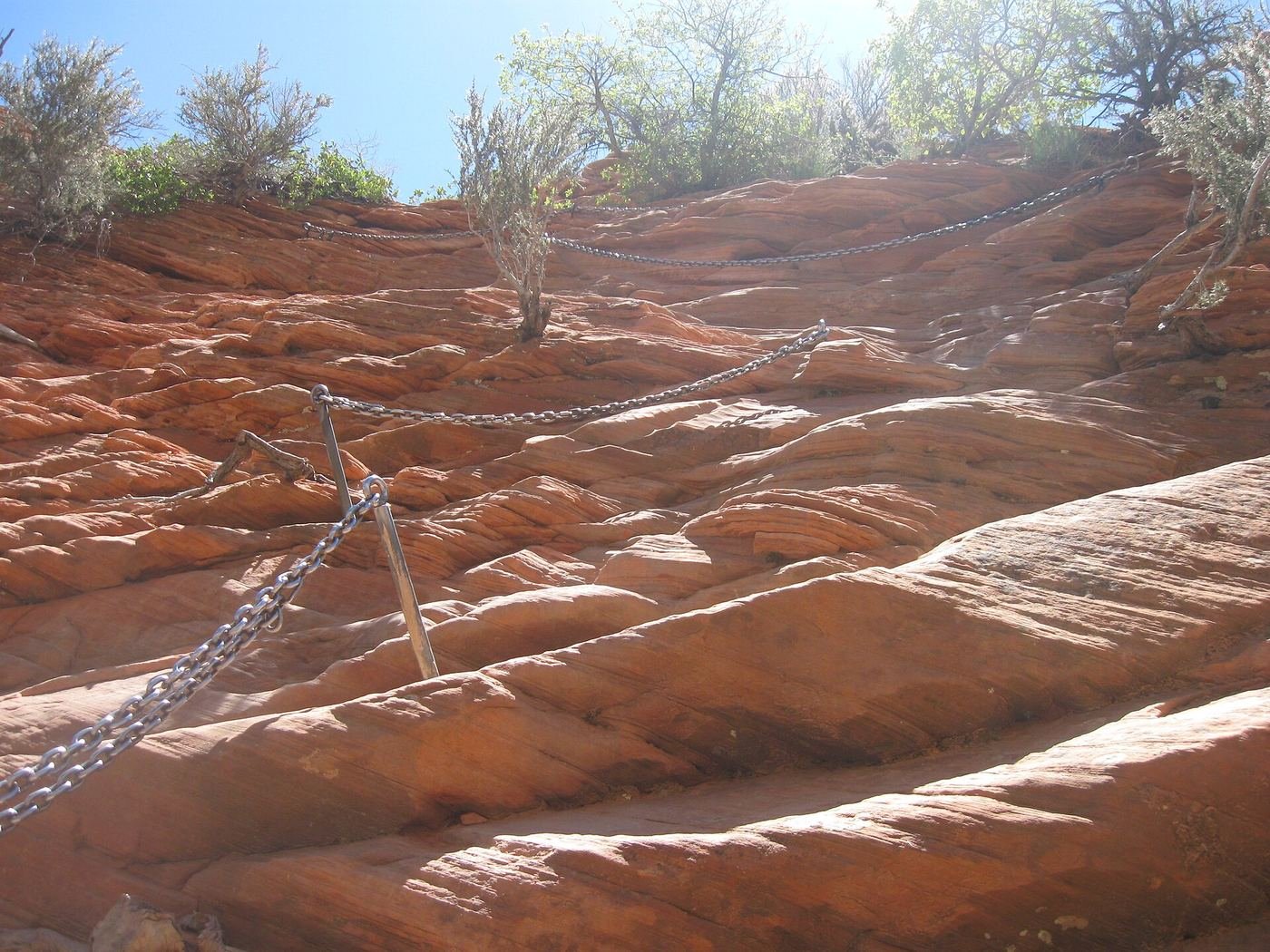
The one everyone talks about, and it earns it. Paved switchbacks (Walter's Wiggles) climb to Scout Lookout, then a narrow chain-assisted ridge with real exposure on both sides takes you to the summit. A permit through Recreation.gov is required past Scout Lookout — apply for the seasonal or day-before lottery, since you can't get one at the trailhead. 5.4 mi RT, 1,488 ft gain, strenuous.
-
2. The Narrows
No trail — you wade directly up the Virgin River between walls that close to twenty feet apart. Most people go about 5 miles round trip to Big Spring. Rent a walking stick and neoprene canyon shoes in Springdale, and check the flash-flood forecast before you go in. Up to 9.4 mi RT, moderate.
-
3. Observation Point via East Mesa Trail
This is my pick for the most underrated view in the park. The original route from Weeping Rock has been closed since 2019 due to landslides, so East Mesa is now the only way in — and honestly, it's the easier hike for a comparable payoff. Mostly flat with a bit of descent (and re-climb) near the end. Getting to the trailhead itself needs a high-clearance or 4WD vehicle on a dirt road. 7 mi RT, 705 ft gain, moderate, 2.5–3 hrs.
-
4. Emerald Pools Trail
Three tiers of increasing difficulty from one trailhead — a paved Lower Pool with a waterfall grotto, then steeper dirt up to the Middle and Upper Pools. Genuinely tailorable to how tired your legs already are. 1.2–3 mi RT, easy-moderate.
-
5. Canyon Overlook Trail
The best short payoff in the park in my opinion — a climb over slickrock ledges to a sweeping view of the lower canyon. Outside the shuttle zone, so you can drive right to the small trailhead lot near the tunnel. 1 mi RT, easy-moderate.
-
6. Riverside Walk
An easy, paved, mostly flat walk along the Virgin River from the Temple of Sinawava shuttle stop to the mouth of The Narrows. I'd send anyone here who wants a taste of the canyon without the full wading commitment — or as the warm-up before you actually go in.
-
7. Kolob Canyons
Most visitors never make it here, and that's the appeal — it's a separate section of the park about 40 minutes from the main canyon, with its own entrance off I-15. The Kolob Fingers Road Scenic Byway winds between narrow parallel box canyons and 2,000-foot cliff walls. Taylor Creek Trail leads to the Double Arch Alcove, and if you're up for something longer, La Verkin Creek Trail reaches Kolob Arch, one of the largest freestanding arches in the world.
-
8. Weeping Rock
Reopened in September 2025 after a multi-year closure from a 2023 rockslide, with rebuilt stairways and railings. It's a short walk to an alcove where water seeps continuously through the sandstone — worth the few minutes it takes, even though the trails that used to continue from here (Hidden Canyon, the old East Rim route) are still closed.
-
9. Zion Canyon Scenic Drive
Even if you don't hike a single step, ride the shuttle the full length of the canyon at least once. The Watchman, the Great White Throne, and Angels Landing itself all stack up through the windows in a way photos don't quite capture. Shuttle-only March through November.
-
10. Book a Canyoneering Trip or Rent Narrows Gear from a Local Outfitter
Springdale has real, established outfitters that rent canyon shoes and dry gear for The Narrows and run guided canyoneering trips into Zion's slot canyons for anyone who wants to go beyond what you can do solo. If you're on the fence about renting gear versus buying it, I'd rent for a first trip — it's a genuinely different kind of hiking, and worth trying with the right equipment before you invest in your own.
Build Your Zion Trip, Free
I built ParkPlan to turn a list like this into a real day-by-day itinerary with your own dates, travelers, and budget.
Start My Zion Trip → Or see my full 1, 2 & 3-day Zion itineraryNearby Parks to Pair With Zion
Building a longer road trip? These guides sit within a day's drive of this one.
Trail stats, access details, and closures are accurate as of publication but change — always confirm current conditions at nps.gov/zion before you go.