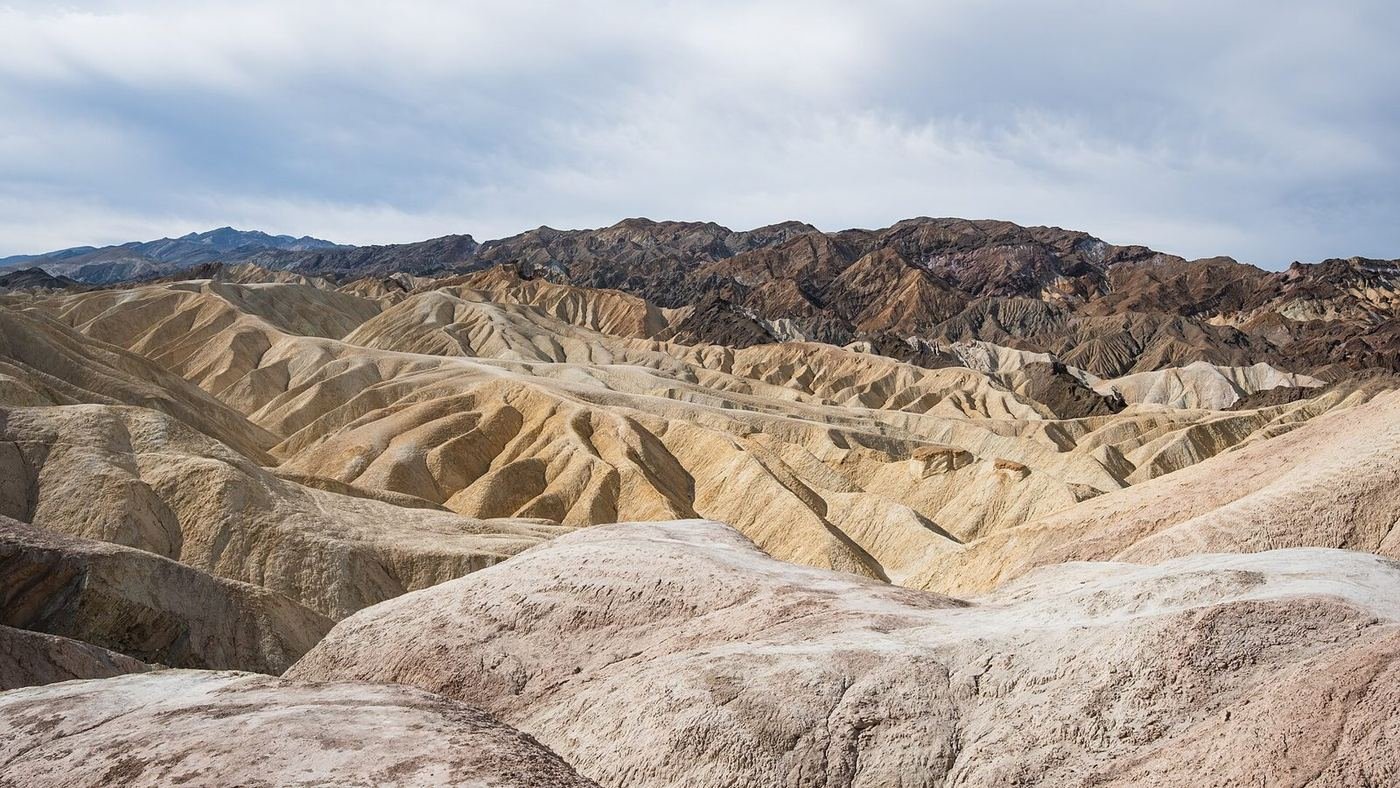
Death Valley drew roughly 1.3 million visitors in 2025, and almost every one of them is chasing the same handful of landmarks — but the order and the time of day you see them in decides whether it feels like a highlight reel or a slog in the sun. This list is how I'd rank the park's best experiences, with the timing built in.
Best Time of Year to Visit, and Why
I'd go November through March, and I'd be specific about why: this is one of the hottest places on Earth, with summer highs that regularly pass 120°F and nights that barely cool off, so hiking in July isn't a bragging-rights trip, it's a safety risk. Winter days run in the 60s and 70s, which makes even the longer canyon walks pleasant.
The tradeoff is crowds — February and the weeks around spring break are the busiest, and lodging at Furnace Creek can sell out months ahead. March is my pick for the balance: wildflowers sometimes show up on the alluvial fans, it's still comfortable, and the holiday crush has passed.
How Death Valley Compares to Joshua Tree
People often pick one California desert park, so here's my honest comparison.
| Death Valley | Joshua Tree | |
|---|---|---|
| Terrain | Salt flats, badlands, dunes, and high peaks | Boulder piles, Joshua trees, and desert oases |
| Scale | 3.4 million acres — long drives between stops | About 800,000 acres — compact and easier to cover |
| Crowds | Heavy in winter at a few hubs | Heavy on weekends near the main entrances |
| Best time | Nov–Mar | Oct–May |
| Best for | Big views, geology, and dark skies | Scrambling, climbing, and sunsets in the boulders |
If I could only pick one, I'd choose Death Valley for sheer scale and strangeness — it feels like a different planet. I'd pick Joshua Tree if you want a shorter drive from Los Angeles and more things to climb on.
Hiking Checklist — Death Valley National Park
Heat and distance drive my kit here, not rain. This is what I'd carry on every outing in Death Valley:
- A gallon of water per person per day — more in warm months, and keep a reserve in the car for emergencies.
- A wide-brim hat and real sun protection — there's almost no natural shade on the valley floor.
- Electrolytes or salty snacks — plain water alone doesn't cut it when you're sweating that much.
- Sturdy closed-toe shoes — dune sand and rough gravel both punish sandals.
- A full tank of gas and a spare tire — services are far apart and a breakdown is not casual.
- An offline map and a paper road map — cell coverage is rare across most of the park.
- Layers for sunrise and the high country — mornings and Dante's View can be genuinely cold.
The 10 Best Things to Do in Death Valley National Park
-
1. Watch sunrise at Zabriskie Point
A short paved walk to an overlook above banded, eroded badlands that glow at first light. It's the single best return on effort in the park. 0.25 mi RT, easy, 15–30 min.
-
2. Walk out on the salt flats at Badwater Basin
The lowest point in North America at 282 feet below sea level, with polygon-shaped salt crust a few hundred yards from the boardwalk. 1 mi RT to the flat's edge, easy, 20–45 min.
-
3. Hike Golden Canyon to Red Cathedral
A gentle canyon walk ending below a wall of red-orange rock. Do it in the morning while the walls shade the trail. 3 mi RT, moderate, 1.5–2 hrs.
-
4. Climb the Mesquite Flat Sand Dunes
Pick any ridge and walk out — the tallest crests are about a mile from the parking area. Go at sunrise or sunset when the sand isn't scorching. About 2 mi RT, moderate, 1–1.5 hrs.
-
5. Drive Artists Drive and stop at Artists Palette
A 9-mile one-way loop that ends in hillsides painted green, pink, and purple by oxidized minerals. Best in the last two hours before sunset. 25–45 min.
-
6. Look down on the valley from Dante's View
A 25-mile drive up to a viewpoint at around 5,475 feet that looks straight down on Badwater Basin. Sunrise and sunset are best, and it's much cooler up there. 45 min plus drive.
-
7. Stand on the rim of Ubehebe Crater
A volcanic blast crater roughly 600 feet deep, reached by a long drive in the north end of the park. An easy rim loop is available. 1.5 mi loop, moderate, 1 hr.
-
8. Scramble up Mosaic Canyon
Polished marble walls and a couple of short dry falls in the first half mile — one of the few shaded walks in the park by late morning. 4 mi RT, moderate, 2.5–3 hrs.
-
9. Learn the mining history at Harmony Borax Works
A paved loop past the ruins of the borax works that made the famous 20-mule-team wagons necessary. A flat, easy add near Furnace Creek. 0.4 mi loop, easy, 30 min.
-
10. Stargaze under one of the darkest skies in the country
Death Valley is a Gold-tier International Dark Sky Park. Pull off anywhere away from the resort lights after dark — the dunes and Badwater are two of my favorite spots. Bring a jacket, even in spring.
Build Your Death Valley Trip, Free
I built ParkPlan to turn a list like this into a real day-by-day itinerary with your own dates, travelers, and budget.
Start My Death Valley Trip → Or see my full 1, 2 & 3-day Death Valley itineraryNearby Parks to Pair With Death Valley
Building a longer road trip? These guides sit within a day's drive of this one.
Trail stats, road closures, and heat advisories are accurate as of publication but change quickly in this park — always confirm current conditions, road status, and reservation rules at nps.gov/deva before you go.