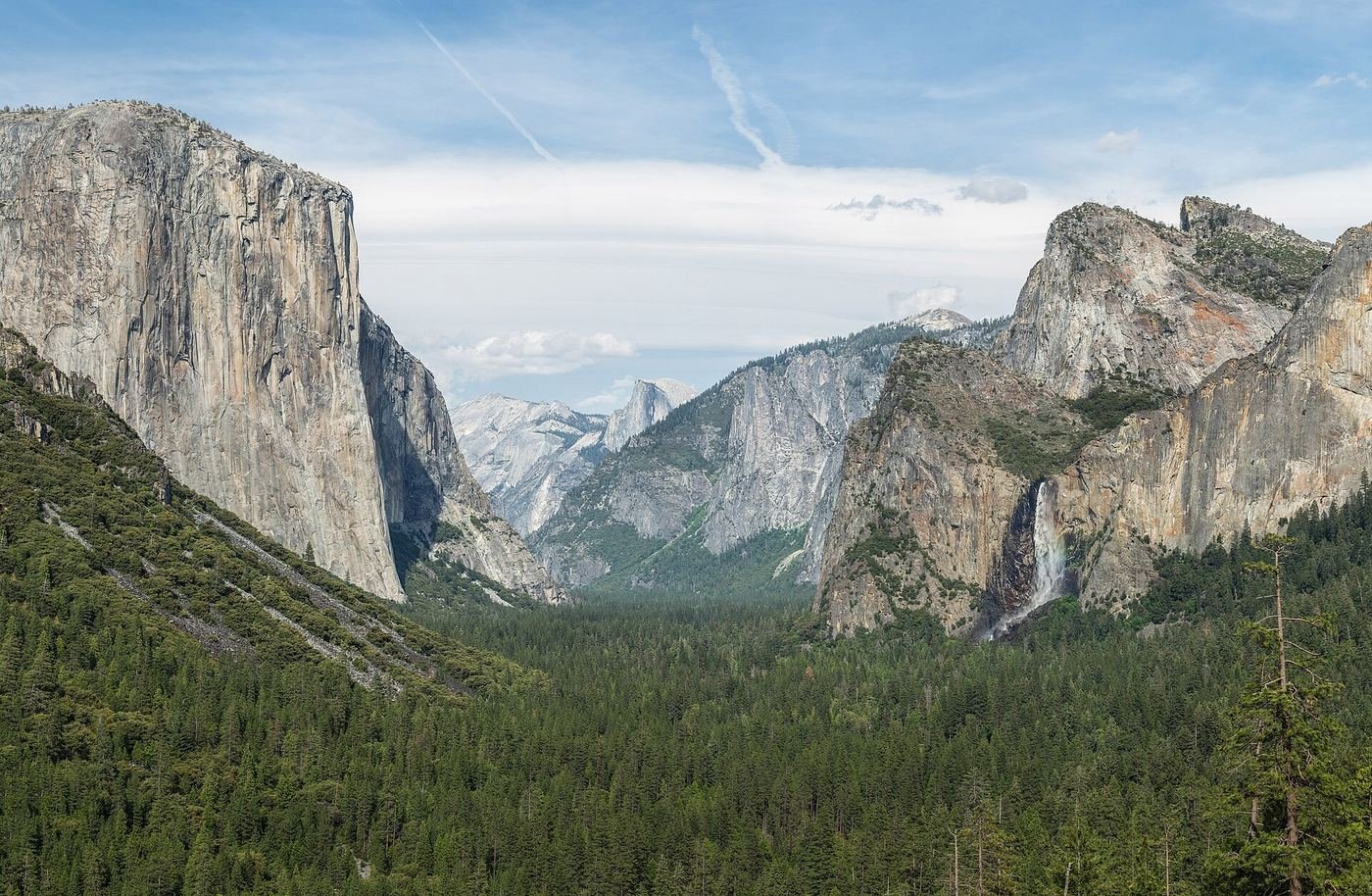
Yosemite pulled in over 4.2 million visitors in 2025, and nearly all of them funnel into the same seven-square-mile valley floor. That's not a knock on the valley — El Capitan, Half Dome, and the falls are famous for good reason — but there's real payoff in going a little further, whether that's up to Glacier Point or out to Tuolumne Meadows. Here's my real list, plus the planning details that actually change how good your trip is.
Best Time of Year to Visit, and Why
I'd go in May or June if waterfalls are the priority, or September and early October if crowds and heat matter more to you. Here's my honest reasoning: Yosemite's waterfalls are fed by snowmelt, and Yosemite Falls in particular can slow to a trickle or dry up almost entirely by late summer, so if seeing the falls at full power is the point of your trip, late spring is non-negotiable. The tradeoff is that late spring also means Tioga Road and Glacier Point Road are often still closed or only just opening — both are genuinely weather-dependent every year, clearing sometime between late May and mid-June. Fall gives you a quieter park, cooler hiking temperatures, and reliably open high-country roads, but the waterfalls will be a shadow of their spring selves. Summer is the busiest and hottest window, and with no day-use reservation system in 2026, valley traffic and parking are the real cost of visiting then.
How Yosemite Compares to Sequoia & Kings Canyon
I get asked whether someone should do Yosemite or Sequoia & Kings Canyon if they only have time for one, so here's my honest comparison:
| Yosemite | Sequoia & Kings Canyon | |
|---|---|---|
| Terrain | Dramatic granite valley walls and waterfalls | Giant sequoia groves and rugged Sierra backcountry |
| Signature sight | Half Dome and El Capitan rising out of the valley floor | General Sherman, the largest tree on Earth by volume |
| Size | ~748,000 acres, but most visitors stay in the ~7-sq-mi valley | Over 1,350 sq mi combined — more spread out |
| Crowds | 4.2M+ visitors a year, heavily concentrated in the valley | Far fewer visitors spread over more land |
| Best for | Iconic views, waterfalls, and big-name climbing and hiking | Genuine solitude and the biggest trees you'll ever stand next to |
If I had to pick just one, I'd pick Yosemite for the sheer visual drama of the valley — but if you want to actually feel alone in a forest, Sequoia & Kings Canyon delivers that in a way Yosemite's valley floor mostly can't anymore.
Hiking Checklist — Yosemite National Park
Obviously, for anything beyond a short valley walk, you'll want real hiking gear, not just sneakers and a water bottle. Here's what I actually bring on every hike in Yosemite:
- A 2–3L hydration reservoir — the climb to Vernal and Nevada Falls or up toward Half Dome is long enough that stopping to dig out a bottle actually costs you water intake over the day.
- Real hiking boots or trail shoes with grip — granite steps get slick when wet, especially on the Mist Trail, and the Half Dome cables demand real traction.
- A packable rain shell — not for the weather, but for the Mist Trail itself; you will get sprayed, sometimes soaked, depending on the season's snowmelt.
- Work gloves for the Half Dome cables — the steel cables get worn smooth by thousands of hands; gloves make the grip dramatically more secure.
- A headlamp with fresh batteries — Half Dome day hikers typically start in the dark, and I've also come off Sentinel Dome later than planned more than once.
- High-SPF sunscreen and a sun hat — granite reflects heat and light, and exposed sections like Glacier Point Road viewpoints and Tuolumne's open meadows have little shade.
- A bear-resistant food canister or use of the in-park bear boxes — required for overnight backcountry trips, and a smart habit even for a day pack left in the car; black bears are active throughout the park and food-conditioned bears are a real problem here.
The 10 Best Things to Do in Yosemite National Park
-
1. Half Dome via the John Muir Trail
The park's ultimate day hike — 14 to 16 miles round trip, ending with a steel-cable climb up the final stretch of granite to a 360-degree summit view. A permit is required to go past the base of the subdome, available only through a preseason lottery in March or a daily lottery two days out. Very strenuous, 10–12 hrs.
-
2. Mist Trail to Vernal & Nevada Falls
A steady climb along the Merced River that puts you close enough to Vernal Fall to get soaked on the granite steps, then continues up to Nevada Fall for those who keep going. 5.4 mi RT, strenuous, 4–6 hrs.
-
3. Glacier Point
A short paved walk from the parking area to one of the best views in the entire national park system — Half Dome at eye level, with Yosemite Falls and the valley floor spread out below. Only accessible when Glacier Point Road is open, roughly late May through October or November depending on snow.
-
4. Tunnel View
The classic postcard shot of the park — El Capitan, Bridalveil Fall, and Half Dome all in one frame from a roadside pullout as you enter the valley on Highway 41. No hiking required, and it's just as striking at sunrise or sunset as anything you'll find at the end of a trail.
-
5. Yosemite Falls (Lower and Upper Trails)
North America's tallest waterfall, viewable up close on the easy, paved Lower Yosemite Fall Trail, or via the much longer and steeper Upper Fall Trail for those who want the full 2,425-foot drop from the top. Both are best in April through June, before snowmelt tapers off. Lower: 1 mi RT, easy; Upper: 7.2 mi RT, strenuous.
-
6. Mariposa Grove of Giant Sequoias
Over 500 mature giant sequoias, including some of the largest living trees on Earth, about an hour's drive south of Yosemite Valley near the park's south entrance. A shuttle typically runs from the welcome plaza to the grove in peak season. 2–7 mi RT depending on how far you walk, easy to moderate.
-
7. Tuolumne Meadows and Tioga Road
A genuinely different Yosemite — high-elevation subalpine meadows, granite domes, and far fewer people, reachable only when the seasonal road is open. Lembert Dome and Dog Lake is a good introduction; Cathedral Lakes is the longer, more rewarding option if you have the legs for it.
-
8. Sentinel Dome and Taft Point
Two short hikes sharing a trailhead area off Glacier Point Road — Sentinel Dome for a 360-degree summit view rivaling Glacier Point itself, Taft Point for a dramatic, unguarded cliff-edge overlook. Easy to pair both in one afternoon. Sentinel Dome: 2.2 mi RT, moderate; Taft Point: 2.2 mi RT, easy-moderate.
-
9. Mirror Lake Loop
A gentler valley-floor option that circles a seasonal lake with reflections of Half Dome and Mount Watkins — best earlier in the year before the lake dries down to a meadow later in summer. 5 mi loop, easy-moderate, 2–3 hrs.
-
10. Bridalveil Fall Trail
A short, easy walk to the base of one of the valley's most reliable year-round waterfalls — unlike Yosemite Falls, Bridalveil keeps flowing well into summer, so it's a good pick even on a September or October trip when the bigger falls have thinned out. Expect some spray near the base in spring. 0.5 mi RT, easy, 20–30 min.
Build Your Yosemite Trip, Free
I built ParkPlan to turn a list like this into a real day-by-day itinerary with your own dates, travelers, and budget.
Start My Yosemite Trip → Or see my full 1–4 day Yosemite itineraryNearby Parks to Pair With Yosemite
Building a longer road trip? These guides sit within a day's drive of this one.
Trail stats, access details, and closures are accurate as of publication but change — always confirm current conditions at nps.gov/yose before you go.